
Status: UNSOLVED
Summary
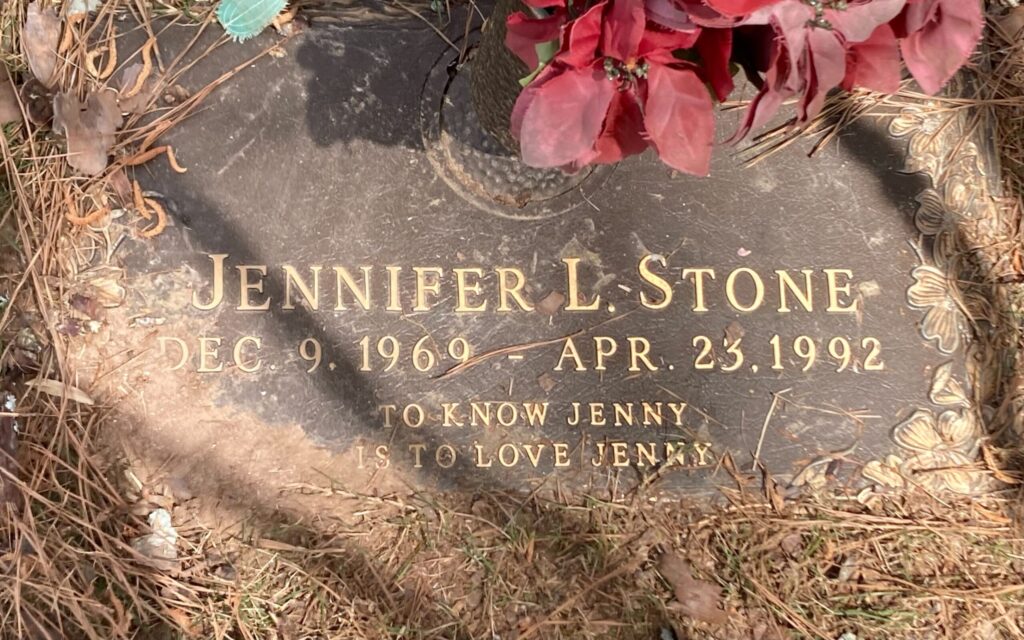
Jennifer Lynn “Jenny” Stone was 22 years old and eight days from graduating from the University of Georgia when she was raped and strangled in her small rented cottage in downtown Athens, Georgia, in the early hours of Thursday, April 23, 1992. Her friends found her body that evening.
More than three decades later, no one has been charged with her murder. A single male DNA profile recovered from the scene has never matched anyone, and the man who sold her cameras for drugs within hours has never been identified.
Who Jenny Stone Was
Jenny was the youngest of five sisters, and graduated from The Lovett School in Atlanta before enrolling at the University of Georgia’s Henry W. Grady College of Journalism and Mass Communication. She majored in advertising with a minor in photography, belonged to the Ad Club and Kappa Delta sorority, and spent much of her time in the darkroom. She had traveled through Europe, had just won a summer internship with an Atlanta advertising agency, and planned to attend the Portfolio Center after graduation. Friends and faculty described her as independent, dedicated, and “not a big partier.” Investigators said she was not known to have problems with anyone.
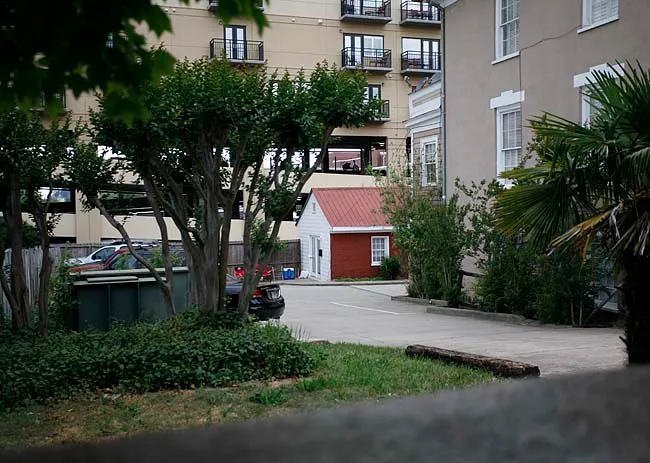
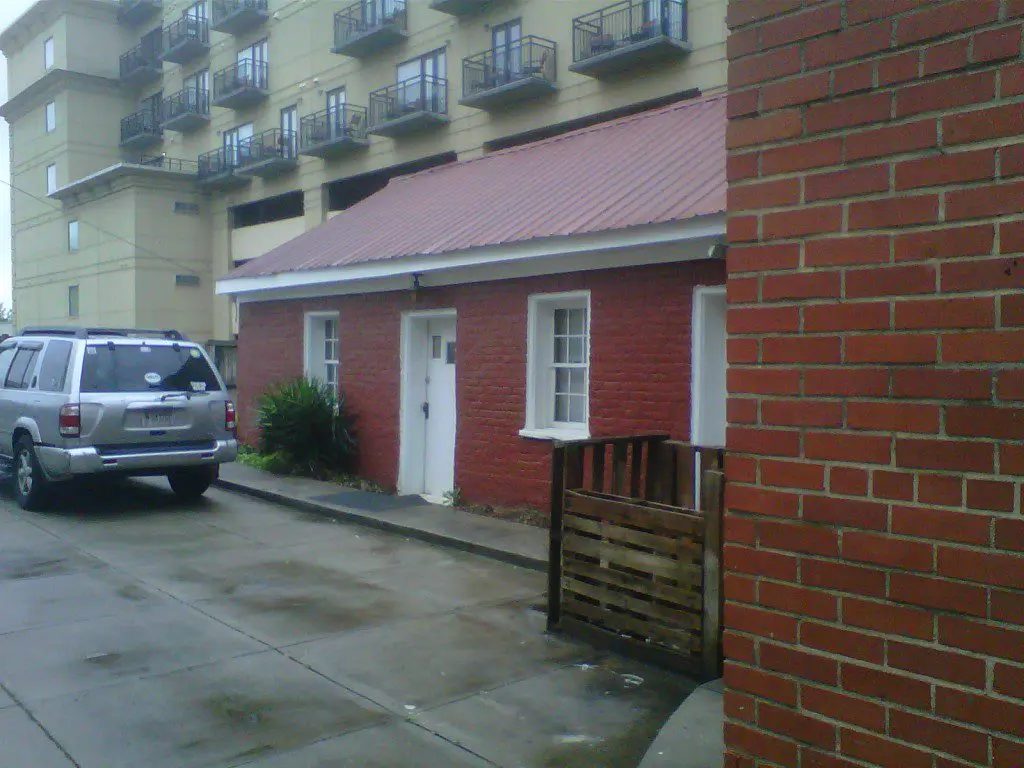
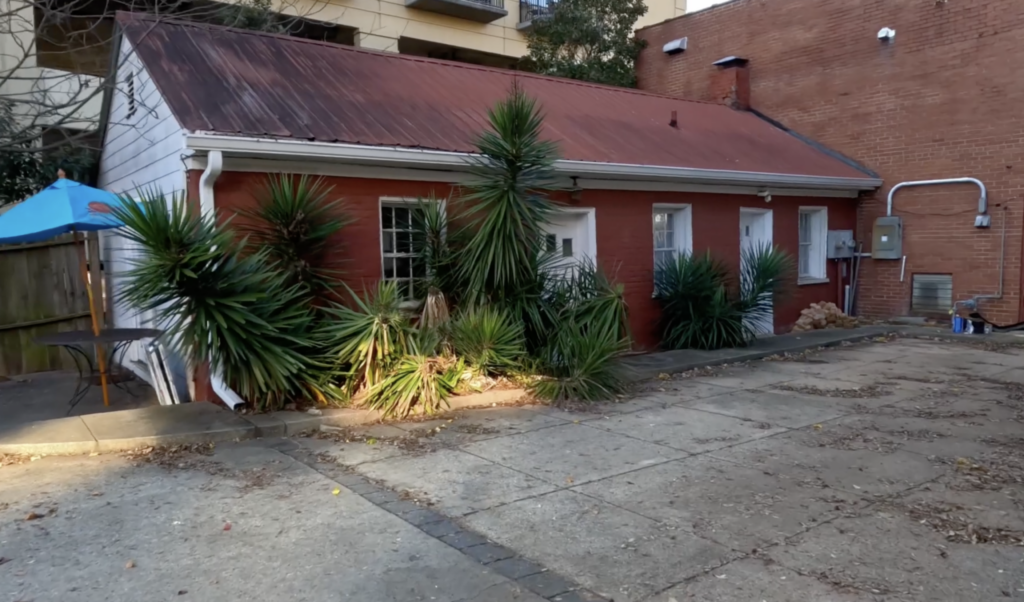
She lived alone with two cats in a one-bedroom carriage house at 187 Hull Street, tucked behind an antiques shop and a formalwear store beside the Greyhound bus station. Friends said the cottage was hard to see from the street, and she reportedly felt safe there because few people knew it was back there.
The Night and the Discovery
On Wednesday, April 22, Jenny attended her classes, spoke with a professor about her internship, and worked with classmates on a mock advertising campaign. She spoke by phone with a friend around 11 p.m. Later police accounts describe another call around 1 a.m. and say she was last seen alive by friends around midnight.
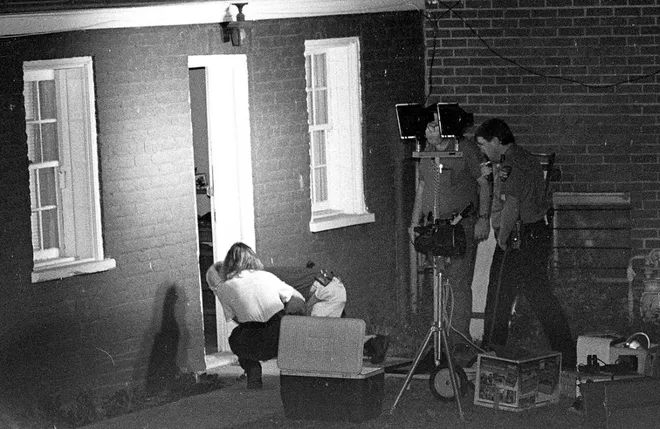
On Thursday she missed two project meetings, which was unheard of for her. Around 7 p.m. that evening, three friends went to her cottage to look for her. They found the side door ajar about six inches and Jenny’s body in the bedroom. Local television stations were broadcasting from the scene by 11 p.m. It was the first murder anyone could remember in the downtown district.
The Scene
Police held the cottage for about four days, assisted by the Georgia Bureau of Investigation (GBI) and district attorney investigators, and later described it as the most thoroughly examined crime scene in the department’s history. They collected hundreds of pieces of evidence and searched with lasers and fingerprint powder.
In 1992, police said there were few signs of a struggle, that her keys, car, and valuables were untouched, and that the visible injuries were bruises on her neck. Nearly 20 years later, the lead detective described a more violent struggle that began in the kitchen.
There was no forced entry through the door. A rear window screen appeared to have been tampered with, but police said they could not tell when. Friends disagreed about whether Jenny habitually locked her doors or not.
The Autopsy and the Physical Evidence
A state crime lab autopsy found that Jenny had been strangled. Autopsy findings released within days confirmed a sexual assault. No weapon was found.
Investigators recovered semen, from which a single male DNA profile was developed. They also recovered hairs from the bed. According to the lead detective, a crime-lab technician said the hairs had characteristics of more than one race.
Most fingerprints in the cottage were accounted for by friends and visitors. Early DNA testing in the 1990s could only compare the scene evidence to a known person but could not search a database. The FBI’s national DNA database (CODIS) went online in 1998, and Georgia began collecting DNA from all convicted felons in 2000. Since then, authorities say the profile has been compared with many thousands of profiles. It has never produced a match.
The Cameras
Police believe the only property taken from the cottage was two 35mm cameras, a Nikon and a Canon. This information was initially withheld from reports.
On July 1, 1992, narcotics officers serving an unrelated search warrant found the Nikon, and the second camera surfaced soon after in a neighboring county.
Detectives traced the cameras back through several hands, and three men were charged in connection with handling the property. From these men, police discovered that within two to three hours of the killing, an unidentified man carrying the cameras approached a stranger on the street near downtown Athens and asked where he could sell them. Over the following hours the cameras were traded for crack cocaine and a small amount of cash. One was reportedly sold for as little as $15 to $20. The film in one of them included photos Jenny had taken and later frames made by someone else.
Police initially called the three “likely suspects” and announced a “major break.” That changed within weeks. The state crime lab reported that DNA from all three men did not match the evidence from the scene, and their fingerprints did not match either. In October 1992 the district attorney, in open court, called the charges weak and said he saw no connection between the disposal of the cameras and the murder. Charges were dropped over the following months.
The Man Who Sold the Cameras
Investigators focused on the man who first had the cameras. According to the people who dealt with him, he was a light-skinned Black man, about 5 feet 10 inches tall, of slim to average build, with a slight mustache, possibly in his 30s. He seemed not to know the local drug market or where to sell what he had, and was a stranger to those he approached. Police believed he was likely a crack cocaine user. It is not clear if a sketch of the suspect was ever released.
That description has real weaknesses. The main witnesses were facing criminal charges when they gave it, and their accounts changed in details. In late 1992 a police commander said the two men’s descriptions “don’t even match” and that police were “looking for a ghost.” The hair evidence that seems to support the description rests on a technique now regarded as unreliable.
The Investigation
The Athens-Clarke County Police Department led the case, working with the GBI from the first day. The lead detective and his partner worked it for a decade, and the detective retired in 2002 without solving it.
Police interviewed hundreds of people. By the one-year anniversary in April 1993, about 100 people had been eliminated as suspects, 43 of them by DNA. By 1994 the number of DNA eliminations was 47, and more than 300 people had been questioned. In 1997 the lead detective said police were “one suspect away from solving the thing.”
Friends and acquaintances were ruled out early, including people Jenny had dated. Men excluded by DNA over the years included people with sexual-assault histories, people who had been in Athens around the time of the murder, and, in 2003, a notorious serial killer then in the news. In 2009 the new lead detective acknowledged that some people were not tested for a DNA match partly because they were white.
Some of the pressure on police came from outside. Just five months after the killing, a state legislator asked the governor to have the GBI take over, which both agencies rejected as unnecessary. Students and a campus-safety group used the case to push for public reporting of off-campus crime.
Over the years, police also followed numerous tips, including claims from prison inmates. In 1996 two federal prisoners wrote to a local newspaper with allegations of a contract killing. None of these has ever been corroborated in the public record, and this site does not treat any of them as established.
What Police Have Said About the Killer
Over the years, police have said several different things, which is itself important context.
- Someone who knew or had seen her. Early on they considered that someone might have watched her and followed her home, though acquaintance-based theories weakened as friends and boyfriends were ruled out.
- An intruder who tried the door. The lead detective’s fullest account, given years later, holds that Jenny stepped outside to smoke after her last phone call, left the door unlocked, and surprised a burglar when she came back in.
- A stranger passing through. Police have gone back and forth on whether the killer arrived by bus, given the bus station next door. In 2002 the lead detective said it would not surprise him if it was someone passing through, though he added that “the odds are the guy who had the cameras is the guy who did the crime.” In 2012 his former partner said the killer probably did not know Jenny, was probably not from Athens, was likely addicted to crack, and might have been jailed or died long ago.
Why the Case Is Still Unsolved
Several factors combine. The killer left no obvious trail. He may have been a stranger, so no interview of Jenny’s circle would have produced him. The one strong physical lead, the DNA, is only useful if he or a relative is in a database. The witnesses who saw him were criminal defendants, and their descriptions were inconsistent. The 1992 lab technology could only test known suspects one at a time, and by the time database searching became possible, the man may have died, moved away, or never been convicted of a crime that would have collected his DNA.
Records, Secrecy, and Legal Fights
The Jennifer Stone case file has never been public. In 2005, the Athens Banner-Herald, a local newspaper, sued for access to the Stone file and a second then-unsolved Athens case. In 2008 the Georgia Supreme Court ruled 4-3 that an unsolved investigation remains “pending,” and its records can be withheld, for as long as the agency treats it as open. Police can therefore keep the file closed, which is a legal reason for secrecy and not by itself evidence of a cover-up.
In the 1990s, a local weekly newspaper, The Athens Observer, also reported on litigation involving efforts to shield parts of the Stone file, and that reporting has fed rumors about various individuals including the son of a local judge. The county disputed parts of that reporting, and this summary does not repeat the rumors.
What Could Still Solve It
- Genetic genealogy. No public record shows that investigative genetic genealogy has ever been attempted with the semen profile. It has solved many older sexual-assault and homicide cases by building a family tree from relatives’ DNA. Whether enough usable DNA remains is the key unknown.
- The film. If the negatives from the recovered camera survive, the frames made by its buyer could show the setting where the man sold the camera. It is possible that new details could be revealed with modern processing tools.
- Fingerprints. Prints on the cameras and in the cottage were compared only to a small group of people, and it is unclear whether they were ever searched in modern national databases.
- Georgia’s cold-case law. The Coleman-Baker Act, in effect since July 2023, created a way to request a GBI cold-case review. Another Athens case, the 2001 murder of Tara Baker, ended with a conviction in February 2026. As of this writing, nothing in the public record shows an application has been filed for Jenny’s case.
Jenny’s Legacy
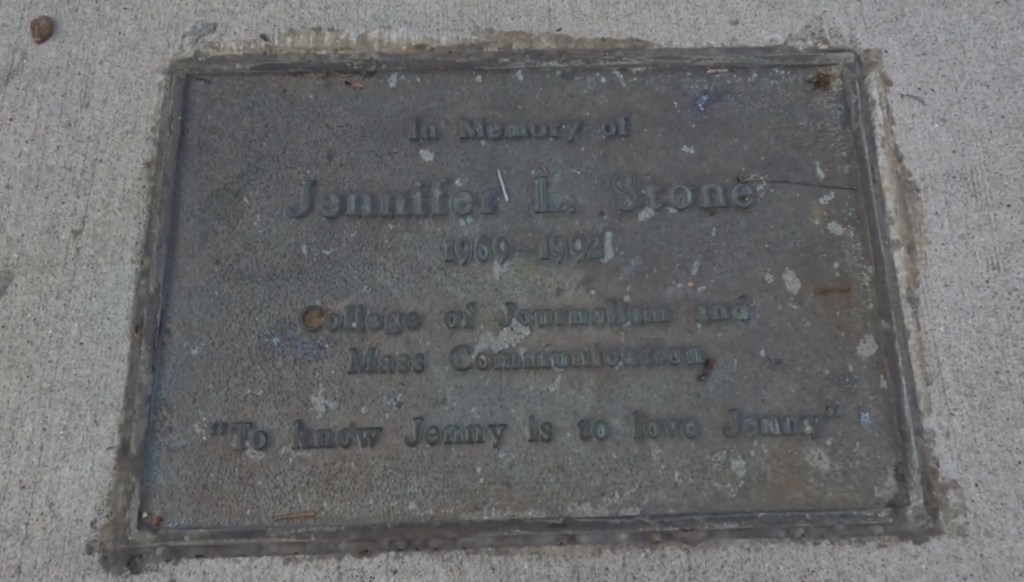
Jenny was awarded her degree posthumously at the University of Georgia commencement in June 1992. Her friends and family organized an exhibit of her photographs. The University of Georgia’s Grady College continues to present a memorial scholarship and an award for creativity in advertising in her name. Her case also helped drive the local debate over campus safety and crime reporting in Athens.
If You Have Information
Anyone with information about the 1992 murder of Jennifer Lynn Stone is urged to contact the Athens-Clarke County Police Department at 706-613-3330, the ACCPD Cold Case Unit at 706-705-4775, or the GBI Region 11 Athens Office at 706-552-2309.
This summary is based on 1992–2012 newspaper coverage, court records, and law-enforcement statements. It deliberately omits the names of people who were investigated, charged with related offenses, or named in rumor. No person named or implied in connection with this case should be presumed guilty of any offense.
Photos








Additional Resources

Articles
Transcribed newspaper articles related to the Jennifer Stone case. Starting in 1992

Media & Links
View a collection of photos and other media related to this case.

Reach Out
Find official tip submission lines or send us a message.